

The book
Broadcasting the Gospel
Rethinking the Parable of the Sower
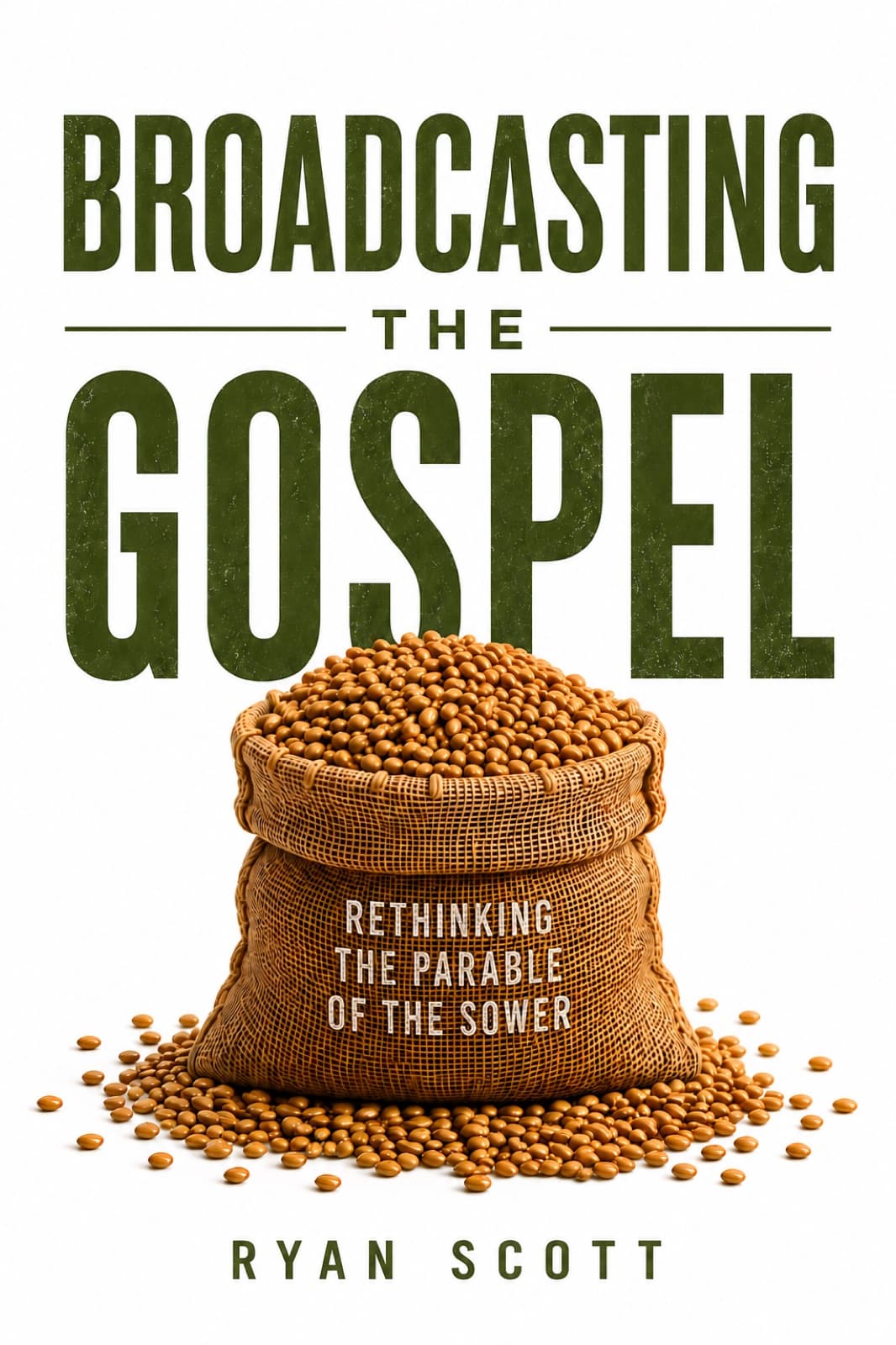
When Jesus told the parable of the sower, a single sower could manage a few acres. With today’s technology a single sower manages thousands of acres alone. This book is not about changing the meaning of the parable but advocating to apply it with the technology we have today.
The argument
Broadcasting was a farming word before it was a media word
To broadcast is to reach into a bag and throw seed with abandon, without knowing where any of it lands. Radio and television borrowed the word because it fit. And it is exactly what the sower is doing in Matthew 13. We usually teach that parable as four kinds of soil, which is true, and in doing so we walk straight past the man. He was not selective. He was not efficient. He was prolific, and only a quarter of what he threw found ground that produced.
That ratio is not a failure rate. It is the cost of covering the good ground. The seed that landed on the path was the price paid for the seed that did not. Which means the lesson is not to be more careful about where we plant. It is to plant so much that the good ground gets covered.
Meanwhile we hold ourselves accountable for the wrong number. At every conference the question is how many are you running — a question about increase, which Scripture is plain about being God’s to give. Nobody asks how much seed went into the ground, and that is the only part any of us controls. This book proposes a different question, and a plain way to answer it.
Then it gets practical. Part Two walks the platforms one at a time, and each chapter covers the same four things: how to set the account up properly, the kind of content that reaches someone who has never been to church, what to expect so you are not discouraged by week two, and a weekly workflow that does not consume your life. They are primers, not encyclopedias. The bar is getting you into the field.
Who it is for
Three ministers we kept in mind
The pastor who has never posted
You have preached for years and you have never once looked into a phone camera. It feels exposed, and a little beneath the work. Start at the chapter about the boy in the field, then record sixty seconds this week.
The church with a website nobody visits
You pay every month for a site with a sermon archive on it. The sermons are real and nobody outside the church has ever seen one. There is a chapter about where that content should actually live.
The minister who handed it all off
Someone in the church runs the accounts, the graphics look good, and none of it is aimed at anyone who has not already been to church. The gap you feel is your own voice, and it is the one that cannot be delegated.
What is covered
Nineteen chapters, in two halves
Part One, chapters one through ten, is the conviction. Chapter eleven turns the corner. Part Two takes the platforms one at a time — read the one you need and come back for the rest.
- 01Going Viral
- 02Missing the Point
- 03How Many Are You Running?
- 04The Broadcasting Mindset
- 05The Law of the Harvest
- 06What Is a Seed?
- 07The Field Is Ready
- 08Systems Reward Harvest
- 09You're Already Doing the Hard Part
- 10Observe Not the Wind
- 11Part Two: how to use these chapters
- 12Church Websites
- 13Podcasting
- 14YouTube
- 15Instagram
- 16TikTok
- 17Facebook
- 18Google Business Profile
- 19When the Seeds Sprout
The author
Ryan Scott
Church planter, Bible college instructor, and digital marketing executive
In 2012, Ryan and his wife Brittani moved to Seattle to start a church with no support, no backing, and no team — an SUV, what they owned, and a dog named Hollister. They stayed thirteen years. The outreach that worked was never the thing he expected: videos on YouTube and writing on the church website. People found the church online, called about baptism, and came.
He had the background for it. He was raised in a pastor’s home and has been in digital marketing since he was building web pages as a teenager — marketing at Jackson College of Ministries, director of promotions at Texas Bible College, and later more than a decade at the executive level, up to chief marketing officer of a HubSpot agency.
He also stopped. The videos tapered off, then ended, while he chased programs and tried to keep people. He writes about that plainly: it is the failure the book is built on, and the reason he is asking other ministers not to repeat it.
Getting a copy
Where to buy it
The book is available now on Amazon.
- Buy the BookAvailable on Amazon
Questions
The things people ask first
The book mentions SowerStack. What is that?
Is this a social media course?
I do not like these platforms.
How much time does this take each week?
Does any of this work for a small church?
What has the parable of the sower got to do with it?
Which platform should I start with?
Where can I buy it?
Can I ask a question that is not covered here?
You do not have to figure this out alone
The book makes the case and gets you started. The community is the people already planting, in fields the size of yours.